Asked ChatGPT: Mental Health as a Museum Portrait
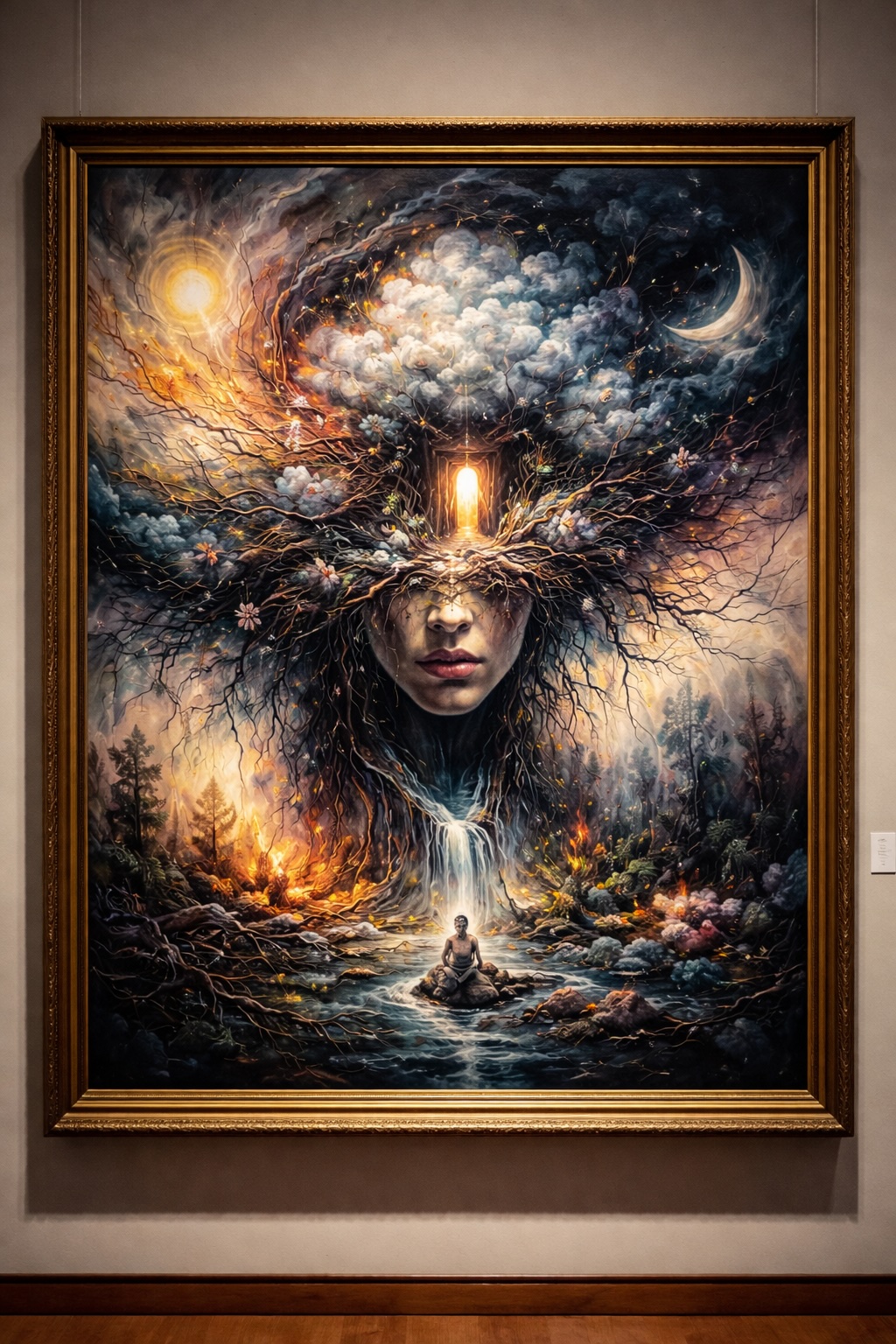
I asked ChatGPT:
"Can you create an interpretive image of what my mental health would look like as a portrait hanging in a museum?"
What started as a creative experiment quickly became something else entirely — a way of seeing my inner world without having to explain it.
Not advice. Not labels. Just a visual translation.
Mental health is notoriously hard to put into words. We flatten it into phrases like "I'm fine" or "I'm overwhelmed", even when the reality is layered, contradictory, and unfinished. Visual metaphor bypasses that. A painting can hold chaos and calm at the same time — and ask nothing in return.
---
Why the "Museum" Framing Matters
This wasn't just an image request. It was a portrait in a museum.
That detail matters.
Museums imply distance, silence, and value. They don't ask whether something is normal or fixable. They ask: What does this mean?
By placing mental health on a museum wall, the prompt reframes inner struggle as something worthy of attention — not something to hide or rush through.
---
The Image ChatGPT Generated
My first reaction was blunt:
"It looks like a mess."
And then I paused — because that reaction was part of the truth.
---
ChatGPT's Interpretation (Summarized)
Here's what the image is saying:
The Open Head / Rooted Crown
The Clouds, Sun, and Moon Together
The Glowing Doorway in the Center
The Water Flowing Downward
The Small Meditating Figure
---
Overall Meaning
This painting represents a mind that is:
But not lost.
---
When the Image Feels Chaotic
AI-generated mental health portraits often feel fragmented or overstimulated — and that can be confronting if you expect something "calm" or aesthetic.
But mess doesn't mean failure. Chaos doesn't mean weakness.
In museums, abstract paintings are the ones people argue about — and stay with the longest. The artwork doesn't change. The viewer does.
---
Why Abstraction Works Better Than a Face
Removing or blurring the face matters.
Mental health isn't who you are — it's what's happening inside you.
Abstract portraits:
They quietly say: "This is not my identity. This is my current state."
---
The Point Isn't to Fix — It's to See
This prompt doesn't try to fix mental health. It tries to see it.
Sometimes that's what we need most — not solutions, but acknowledgment. Not advice, but recognition that what's happening inside is real, complex, and worth looking at.
---
Try It Yourself
If you want to explore this, try this prompt:
"Create an interpretive, abstract portrait of my current mental health as if it were a painting hanging in a modern art museum. Focus on emotional texture, color, and symbolism rather than realism."
Then don't judge it too fast. Ask what it reveals — and what it refuses to explain.
---